Mulvey’s theory rests on the three aspects of ‘the gaze’ in
both the narrative world of the film and the social contexts in which a film is
viewed.
1.
The gaze of the characters at each other
2.
The gaze of the camera
3.
The gaze of the spectator
The Gaze of the Characters at Each Other
First, let’s take point number one. Mulvey’s argument is
that in classical Hollywood films, we are encouraged to see the world through
the gaze of a primarily male protagonist, mainly because of the dominance in Hollywood
editing of the combination of objective and subjective shots. Hitchcock built a
theory of editing around this (via Lev Kuleshov and the associative editing of
the Russian Formalists) – see this youtube
clip http://www.youtube.com/watch?v=hCAE0t6KwJY
to see how Hitchcock reveals his manipulation of the edit to emphasise the gaze
of the male protagonist and determine the spectator’s response to this gaze.
Look for at these two shots from The Graduate

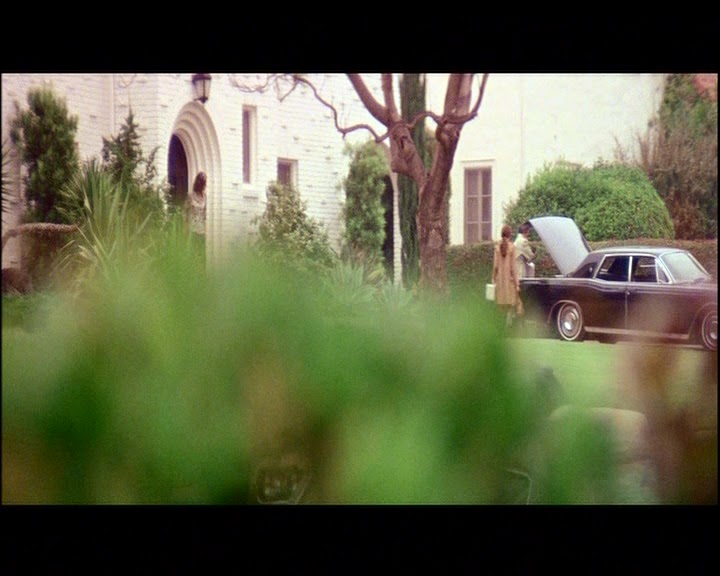
According to Mulvey, when we watch a film we do two things (sometimes at the same time).
1.We identify with the characters onscreen (which can be called NARCISSISM) or
2.We look at the characters with erotic pleasure (which is called VOYERURISM)
Think of the montage set to the music of Scarborough Fair in The Graduate. There are multiple shots of Ben alone gazing at Elaine; the music is wistful, melancholic and we are persuaded to feel sorry for Ben, to feel his sense of loss (this is narcissisism). So in this sense, Mulvey's theory makes absolute sense - or does it?
The Gaze of the Camera

By claiming that the gaze of the camera also favours a
masculine perspective is not difficult to imagine. Think about how many film
directors are male, how many film studios are owned by men, how the companies
financing the studios might well be owned by men and you can see that a
PATRIARCHAL SYSTEM is in place to make the male gaze the dominant one. In this
memorable shot from The Graduate, we see Ben ‘trapped’ beneath the apex of Mrs
Robinson’s bent knee. Although the focus of the shot is clearly Ben and the symbolism
suggests a dominant and aggressive female sexuality, Mrs Robinson’s leg is
objectified: it frames the shot and the camera is placed in a sexually
suggestive position. There are other moments in the film when a woman’s body is
objectified: the scene in the Whisky-a-Go-Go when we see the stripper , the shot
of Mrs Robinson’s stockinged leg in the room at the Taft Hotel. All of these encourage
a woman’s ‘to-be-looked-at-ness’ (as Mulvey calls it) and suggest that the
gaze, even when it is not taken from Ben’s point
of view, is male.
 The role of lighting
also serves to highlight women as an object to be gazed at. Lighting systems
were specifically designed to emphasise a female star’s body, with high key
lighting bathing Hollywood icons such as Rita Hayworth and Marilyn Monroe in
bright, dazzling glory. Other forms of lighting, low key lighting, for example,
have served to emphasise the contours of a woman’s body or face: look at his
image of Marlene Dietrich in which top lighting is used to bathe her face in an
angelic glow but serves to leave the rest of her body shrouded in darkness,
offering connotations of a dual persona - the Madonna and the whore - which Dietrich of course often presented in
her films.
The role of lighting
also serves to highlight women as an object to be gazed at. Lighting systems
were specifically designed to emphasise a female star’s body, with high key
lighting bathing Hollywood icons such as Rita Hayworth and Marilyn Monroe in
bright, dazzling glory. Other forms of lighting, low key lighting, for example,
have served to emphasise the contours of a woman’s body or face: look at his
image of Marlene Dietrich in which top lighting is used to bathe her face in an
angelic glow but serves to leave the rest of her body shrouded in darkness,
offering connotations of a dual persona - the Madonna and the whore - which Dietrich of course often presented in
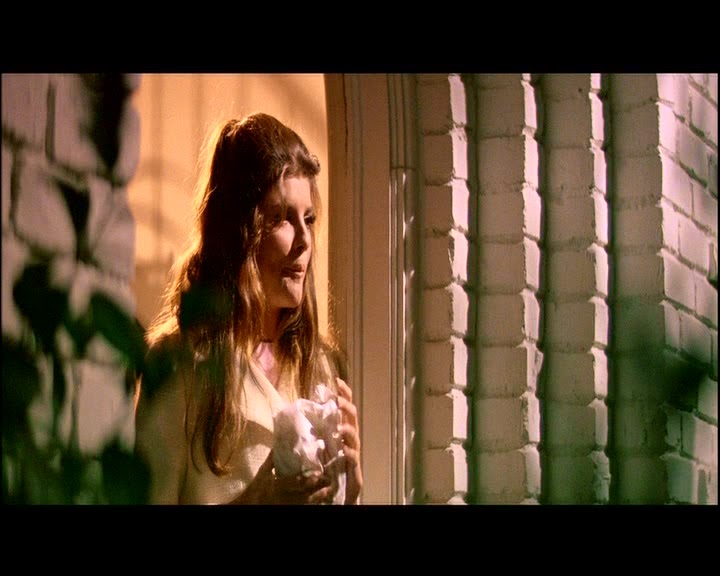
her films. In The Graduate, lighting is used effectively to endow Elaine with an innocent glow, drawing our (and Ben’s) attention to her. But it’s not only Elaine. And in the second shot, look at the way that our focus is kept on Mrs Robinson whilst Ben is in shadow.

The Gaze of the Spectator
Although Dustin Hoffman is the star of the film, it is the women whose bodies are objectified and fetishised for the gaze of the viewing audience. Elaine, Mrs Robinson and of course the stripper are all presented as objects of Ben’s gaze and, through the positioning of the camera and lighting, the audience are persuaded to see the world through his eyes. We cannot escape what the camera puts in front of us. The publicity material for the film foregrounded Mrs Robinson’s stockinged leg, with Ben looking down on this object of desire. This famous image points up what Mulvey called fetishisation. To fetishise something is to focus obsessively on an object that is part of the thing that threatens us: in this way, one can reassert power and control over the thing itself. Men, scared of being ‘castrated’ (psychologically that is) by a woman will fetishise its body parts (you’ve heard the rather crude phrase – “I’m a breast man” or “I’m a legs man” – well, there it is!). By refusing to recognise a woman as ‘a whole’ then man reduces her to a fragment. Look at these two shots from the scene when Mrs Robinson ‘traps’ Ben in Elaine’s bedroom:
Although Dustin Hoffman is the star of the film, it is the women whose bodies are objectified and fetishised for the gaze of the viewing audience. Elaine, Mrs Robinson and of course the stripper are all presented as objects of Ben’s gaze and, through the positioning of the camera and lighting, the audience are persuaded to see the world through his eyes. We cannot escape what the camera puts in front of us. The publicity material for the film foregrounded Mrs Robinson’s stockinged leg, with Ben looking down on this object of desire. This famous image points up what Mulvey called fetishisation. To fetishise something is to focus obsessively on an object that is part of the thing that threatens us: in this way, one can reassert power and control over the thing itself. Men, scared of being ‘castrated’ (psychologically that is) by a woman will fetishise its body parts (you’ve heard the rather crude phrase – “I’m a breast man” or “I’m a legs man” – well, there it is!). By refusing to recognise a woman as ‘a whole’ then man reduces her to a fragment. Look at these two shots from the scene when Mrs Robinson ‘traps’ Ben in Elaine’s bedroom:


The spectator sees Mrs Robinson’s body through Ben’s eyes in a series of flashed shots that reveal breasts, stomach and hips: the woman’s body is fragmented. Now you could argue that Ben certainly doesn’t feel in control at this point: however, Ben fears Mrs Robinson’s body parts and the camera emphasises these parts to the audience in an explicit and comical way.
What happens when we look at men?
For Mulvey, the male role in films was an active one. Men’s
role in films is ‘to do stuff’ – fight, chase, investigate whereas women tend
to slow down the narrative (they prevent the man from facing his destiny by
getting him to fall in love, or they put things in the way of the detective by offering
him sex instead of solutions – see films noir). Here The Graduate seems to
contradict Mulvey’s theory. Ben doesn’t do much ‘acting’ in the first half of
the film: in fact, he spends his time drifting along in much the same way as he
sleeps on his sun lounger in his parent’s pool and it is Mrs Robinson who is
the ‘actor’, the catalyst for his own action. Perhaps Ben’s non-action is his
action, so to speak. The film is a rites-of-passage narrative: Ben only reacts
when he sees the pain he has caused Elaine in the Whiskey-a-Go-Go. Until then,
he has been infantilised, beginning a journey of non-discovery; the ultimate objective
for Ben is to find a future that doesn’t scare him and Mrs Robinson prevents
this, shunting him into a world of bodies and sex.
And what about women who watch the film? Well, Mulvey says that women are either forced to identify with the ‘objectified female’ and measure herself against male expectations, or they inhabit a male point of view of the world and judge the female characters through his eyes.
The Male Body
But what about male bodies? Does Mulvey’s argument about the male gaze extend to viewing the male body? Mulvey didn’t discuss this in her essay but many cultural theorists have done so since. Placing the male body on display in films appears to feminise him, turn him into an object of ‘the gaze’. To counteract this, whenever the male body is naked, it is often engaged in ‘masculine’ activities such as combat, or it is being tortured or injured in some way. If you look at the opening scene to Saturday Night Fever, John Travolta’s character is strutting along the streets of Brooklyn, immaculately dressed and carefully coiffured: to all extent his body is quite ‘feminine’. However, to counteract this, he carries a tin of paint which points up a more masculine trait and, to emphasise his manly appetite, he orders two pizza slices and devours them with atavistic pleasure.
So let’s look at Ben. On several occasions we see Ben’s
body. Look at these two shots. And what about women who watch the film? Well, Mulvey says that women are either forced to identify with the ‘objectified female’ and measure herself against male expectations, or they inhabit a male point of view of the world and judge the female characters through his eyes.
The Male Body
But what about male bodies? Does Mulvey’s argument about the male gaze extend to viewing the male body? Mulvey didn’t discuss this in her essay but many cultural theorists have done so since. Placing the male body on display in films appears to feminise him, turn him into an object of ‘the gaze’. To counteract this, whenever the male body is naked, it is often engaged in ‘masculine’ activities such as combat, or it is being tortured or injured in some way. If you look at the opening scene to Saturday Night Fever, John Travolta’s character is strutting along the streets of Brooklyn, immaculately dressed and carefully coiffured: to all extent his body is quite ‘feminine’. However, to counteract this, he carries a tin of paint which points up a more masculine trait and, to emphasise his manly appetite, he orders two pizza slices and devours them with atavistic pleasure.


In the first he is lying on the sun-lounger and the dazzling crystals of light suggest that his body too is being put on display for our pleasure. However, we can see that he holds a can of beer; moreover, the can is placed in quite a suggestive place and draws our attention to his crotch which suggests his phallic power. In the second shot, once again we see Ben in a female space: the bathroom. He is naked to the waist and joined by his mother which not only links to his infantilism but adds to the femininity of the shot (think of the moment when Ben goes to the student halls and talks to the college boys – they are all together in the showers, not afraid to share their bodies with each other). However, can you see how Ben’s masculinity is confirmed by the liberal application of shaving cream and then, a little later in the scene, he nicks himself with the razor drawing blood from his hand? Once again, the male body is ‘marked’ to avoid it being too feminine.
On the whole, it is interesting to analyse The Graduate from Mulvey's theory of the male gaze. Through it's objectification of Mrs Robinson, the eye-line matches from Ben to the female body, his voyeuristic 'pleasure' in watching Elaine all seem to connect with the theory. But there are problems: in many shots, Ben is the object of the gaze (although we have argued that his 'to-be-looked-at-ness' is qualified by clearly masculine motifs); also, Ben is more often than not sharing the shot with either Elaine or Mrs Robinson, thus implicating the spectator in their own voyeuristic pleasure.